A shower door that looks beautiful but uses the wrong glass is not a bargain. The same goes for a glass tabletop, bathroom mirror, or storefront panel. When comparing annealed versus tempered glass, the better choice depends on where the glass will be installed, how likely it is to be struck, and whether safety-glazing codes apply.
At Top Tier Glass & Mirror, we help homeowners and contractors make this decision before fabrication starts. That matters because custom glass is measured, cut, polished, and built for a specific opening. Once tempered glass is made, there is no cutting it down later to fix a measurement mistake.
Annealed Versus Tempered Glass: The Main Difference
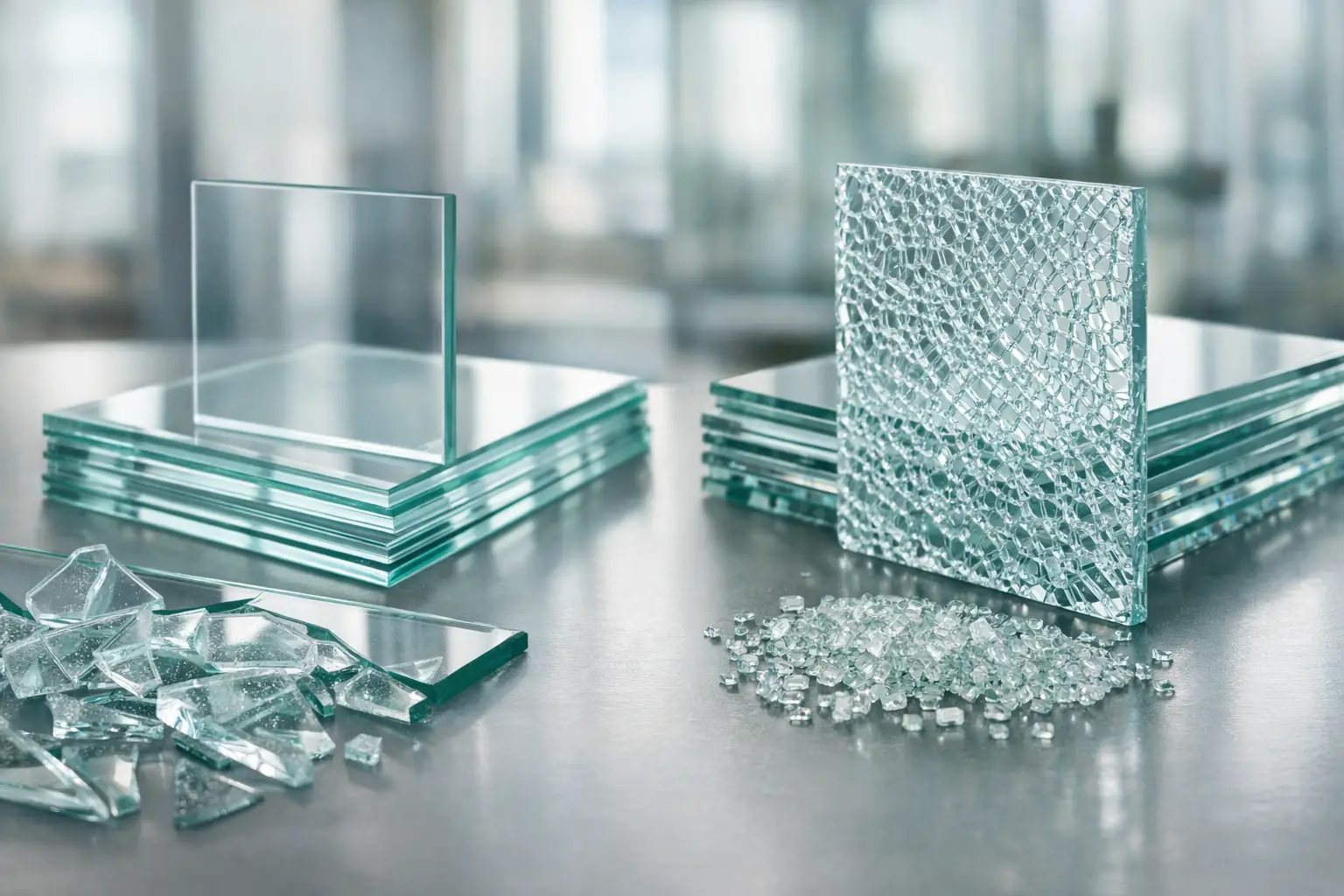
Annealed glass is standard glass that has been cooled gradually after it is made. This controlled cooling relieves internal stress and leaves the pane stable, clear, and workable. It can be cut, drilled, notched, polished, and shaped during fabrication.
Tempered glass starts as annealed glass. It is cut and finished first, then heated to a high temperature and rapidly cooled. That process puts the outer surfaces under compression, making the finished panel much stronger than ordinary annealed glass.
The biggest practical difference shows up when glass breaks. Annealed glass usually breaks into large, sharp pieces. Tempered glass is designed to break into many small, pebble-like fragments that are far less likely to cause a serious cut. It still creates a mess, but it is the safer break pattern for high-risk locations.
Neither type is automatically “better” in every application. Tempered glass is the right call where people may fall into it, lean against it, or hit it with a door, elbow, chair, or object. Annealed glass remains a smart, cost-conscious option for many decorative and protected uses.
When Tempered Glass Is the Right Choice
Tempered safety glass is commonly required by building code in hazardous locations. Requirements can vary by the opening, dimensions, height above the floor, and proximity to doors or water. A professional glass contractor evaluates the actual installation rather than making assumptions based on a photo or a rough measurement.
Shower doors and shower enclosures
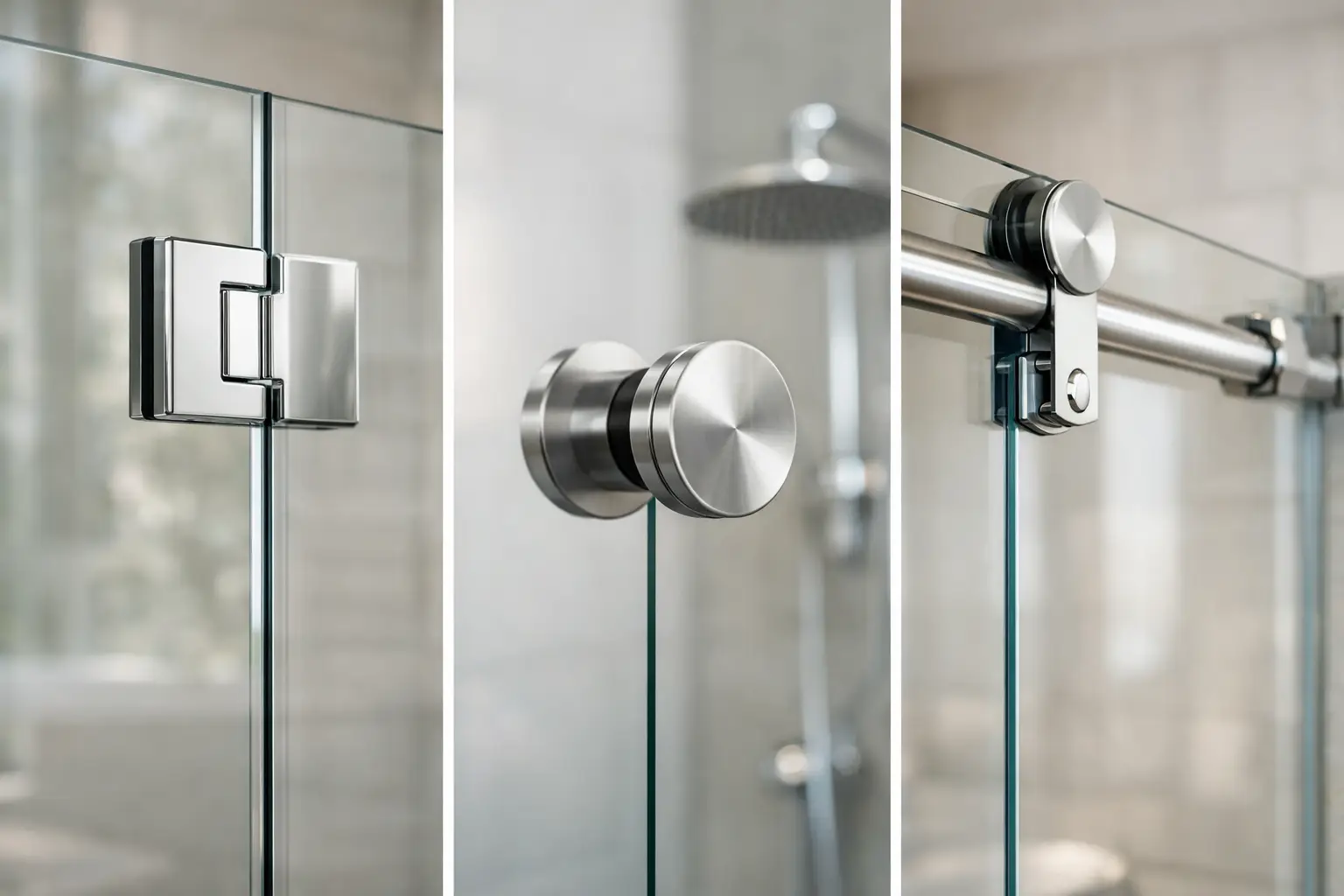
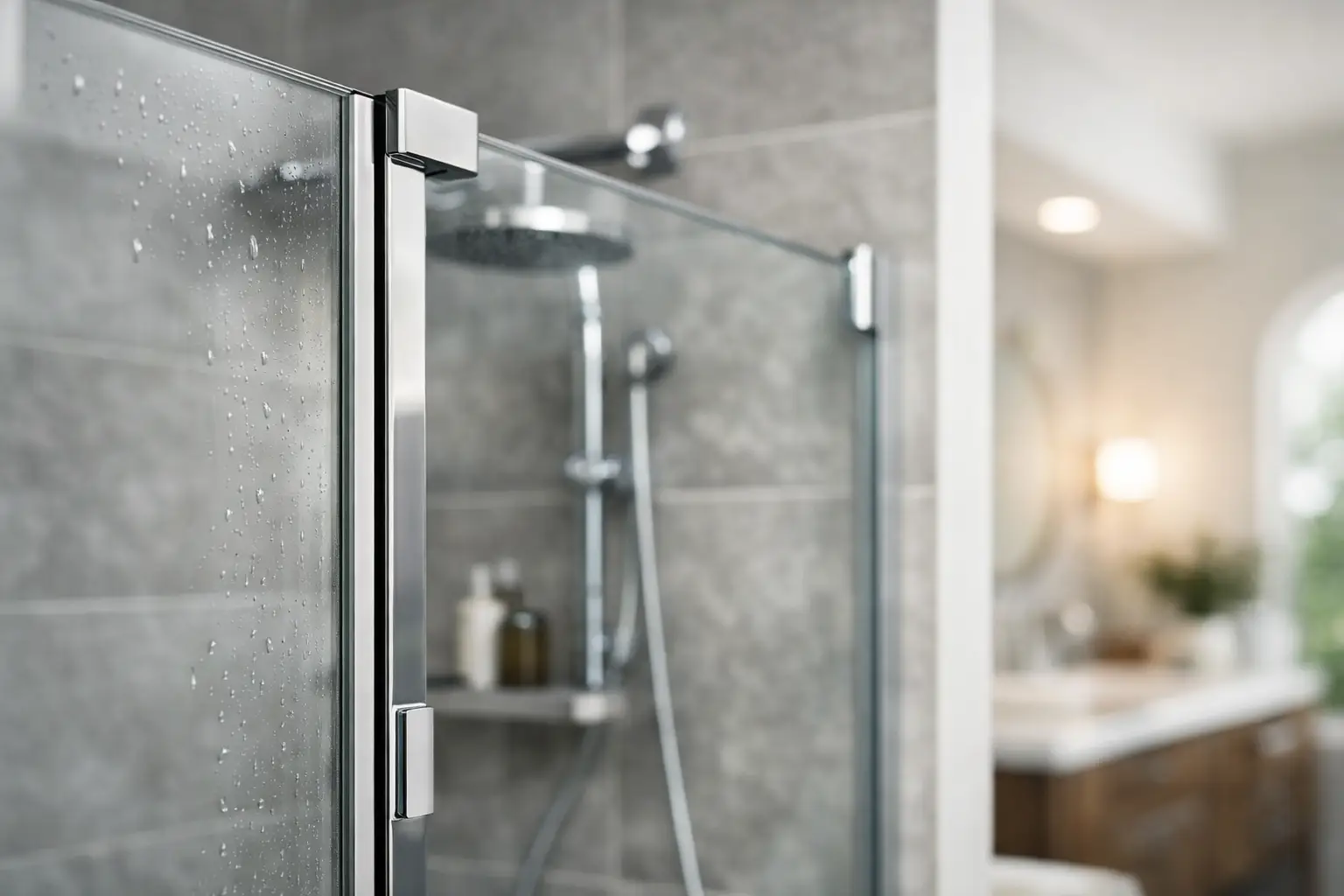
Frameless and semi-frameless shower doors need tempered glass. This is not an area for substitutions. A shower enclosure is exposed to wet conditions, frequent movement, hard surfaces, and direct contact with people every day.
Tempered glass provides the strength needed for heavy shower doors and fixed panels. It also provides the safety break pattern expected in a bathroom. Whether you are installing a clean, modern frameless enclosure or replacing an older bypass door, the glass must be properly measured and fabricated for the hardware, wall conditions, and opening.
Glass near doors, stairs, and walking areas
Glass located in or beside a door is often subject to safety-glazing requirements. The same can be true for sidelites, interior glass partitions near traffic areas, stair rail panels, and low glass panels where someone could fall or collide with the surface.
This is where tempered glass earns its place. It handles normal impacts better than annealed glass, and its break pattern reduces the hazard if a major impact occurs. For contractors, choosing safety glass at the beginning helps prevent failed inspections, delays, and expensive replacement work.
Glass tabletops and furniture tops
A glass tabletop can be annealed or tempered depending on the use. A small, protected glass cover placed over a wood dresser may work well in annealed glass. A dining table, coffee table, desk, or patio table has more exposure to daily impacts and is generally better served by tempered glass.
Tempered glass is especially worthwhile when the top is large, unsupported around the edges, used by children, or installed in a high-traffic area. It offers more peace of mind when chairs, dishes, laptops, and everyday life are part of the equation.
Commercial doors and storefront applications
Storefront glass is not a one-size-fits-all product. A commercial entry door, sidelites, interior office partition, or low-level panel often needs safety glass. Depending on the opening and local code, the correct solution may be tempered glass, laminated glass, or an insulated glass unit that includes safety glass.
Tempered glass handles many standard commercial applications well. Laminated glass may be specified where added security, sound reduction, or glass retention after breakage is needed. The right choice should follow the system, the location, and the code requirements for the project.
Where Annealed Glass Still Makes Sense
Annealed glass is not outdated or inferior. It is simply suited to different jobs. Because it can be cut and finished after it is made, it is often used for custom pieces that need detailed fabrication or future adjustment.
Custom mirrors
Most standard wall mirrors are made with annealed glass and a reflective backing. For a bathroom vanity mirror mounted securely on a wall, that is often the appropriate choice. The project may require polished edges, custom cutouts for lighting or outlets, or a shape designed around a backsplash and vanity.
Mirror safety requirements can change when a mirror is installed in a high-risk location. A professional installer can help determine whether a safety-backed mirror or another solution is appropriate for the application.
Picture frames, cabinet inserts, and protected panels
Annealed glass is a practical choice for framed artwork, cabinet door inserts, shelving inside a protected cabinet, and other applications where the glass is supported and not exposed to heavy impact. It provides a clean appearance at a lower cost than tempering.
For these projects, the edgework still matters. A clean polished edge, accurate cutout, and precise fit are what make custom glass look intentional instead of improvised.
Replacement glass that needs field adjustment
Some replacement projects involve older frames, uneven openings, or conditions that are not fully visible until the existing glass is removed. Annealed glass can offer flexibility when cutting or fitting adjustments may be required during fabrication.
That flexibility disappears after tempering. A tempered panel cannot be trimmed, drilled, or notched once it leaves the tempering process. Any change means making a new panel. This is one reason careful on-site measuring is not optional for shower glass, doors, and other safety-glass projects.
Strength Is Not the Only Factor
Homeowners often hear that tempered glass is four times stronger than annealed glass. While that is a useful general rule, glass selection should not come down to strength alone. Edge damage, installation pressure, hardware placement, and panel size all affect performance.
Tempered glass is strong across its face, but its edges are more vulnerable to damage. A small chip or hard contact on the edge can compromise the panel. That is why proper handling, clearances, quality hardware, and a level installation matter so much with frameless shower doors and glass partitions.
Annealed glass is easier to fabricate, but it has less resistance to impact and breaks into more dangerous shards. In a location where safety glazing is required, its lower price does not make it the right value.
Thickness also matters. A thicker piece of annealed glass does not automatically replace tempered safety glass, and a thicker tempered panel is not necessary for every project. The right thickness depends on the opening size, support method, intended use, and glass type.
What About Laminated Glass?
Laminated glass is worth mentioning because it solves a different problem. It uses two or more sheets of glass bonded with a clear interlayer. When laminated glass breaks, the interlayer helps hold the fragments in place rather than allowing the panel to fall apart.
That makes it useful for certain storefronts, railings, security-minded applications, and projects where retaining the glass after breakage matters. It can also help reduce sound transfer. Laminated glass is not a universal replacement for tempered glass, but it may be the better specification when the project calls for it.
Start With the Opening, Not the Glass Type
The right glass decision begins with a clear look at the finished installation: where the panel sits, how it is supported, who will use the space, and what local code requires. A shower door, vanity mirror, dining table, and storefront may all use clear glass, but they do not face the same demands.
For homeowners, that means fewer surprises after installation. For contractors, it means accurate ordering, cleaner inspections, and less rework. Measure carefully, choose the glass for the actual application, and let the finished piece do what it was built to do: look flawless and perform reliably for years.