A frameless shower enclosure can look clean and custom, but the glass is only part of the finished job. The right shower hardware options determine how the door opens, where it seals, how it feels in your hand, and whether the whole enclosure looks intentional instead of pieced together.
For a bathroom remodel, hardware should never be an afterthought. Hinges, handles, clips, channels, and finishes all need to work with the glass layout, wall conditions, tile, and daily use of the shower. A good-looking choice that is not suited to the opening can create clearance problems, water leaks, or unnecessary strain on the glass.
Start With the Shower Layout
Before choosing a finish or handle style, determine what the enclosure needs to do. A single swinging door, inline panel, corner enclosure, neo-angle shower, or sliding system each uses hardware differently. The size and weight of the glass matter, too.
A wide, heavy door may need stronger hinges and a carefully planned swing direction. A tight bathroom may benefit from a door that opens outward only, or a layout with a fixed panel that keeps the opening practical. For some openings, a sliding door is the best use of space. For others, a true frameless swinging door gives the cleaner, more open look homeowners want.
This is why precise field measurement comes first. Tile can be out of plumb, walls can vary, and an opening that looks square to the eye may not be square enough for a standard off-the-shelf setup. Custom glass and properly matched hardware allow the installation to account for those real-world conditions.
The Main Shower Hardware Options
Hinges for Swinging Glass Doors
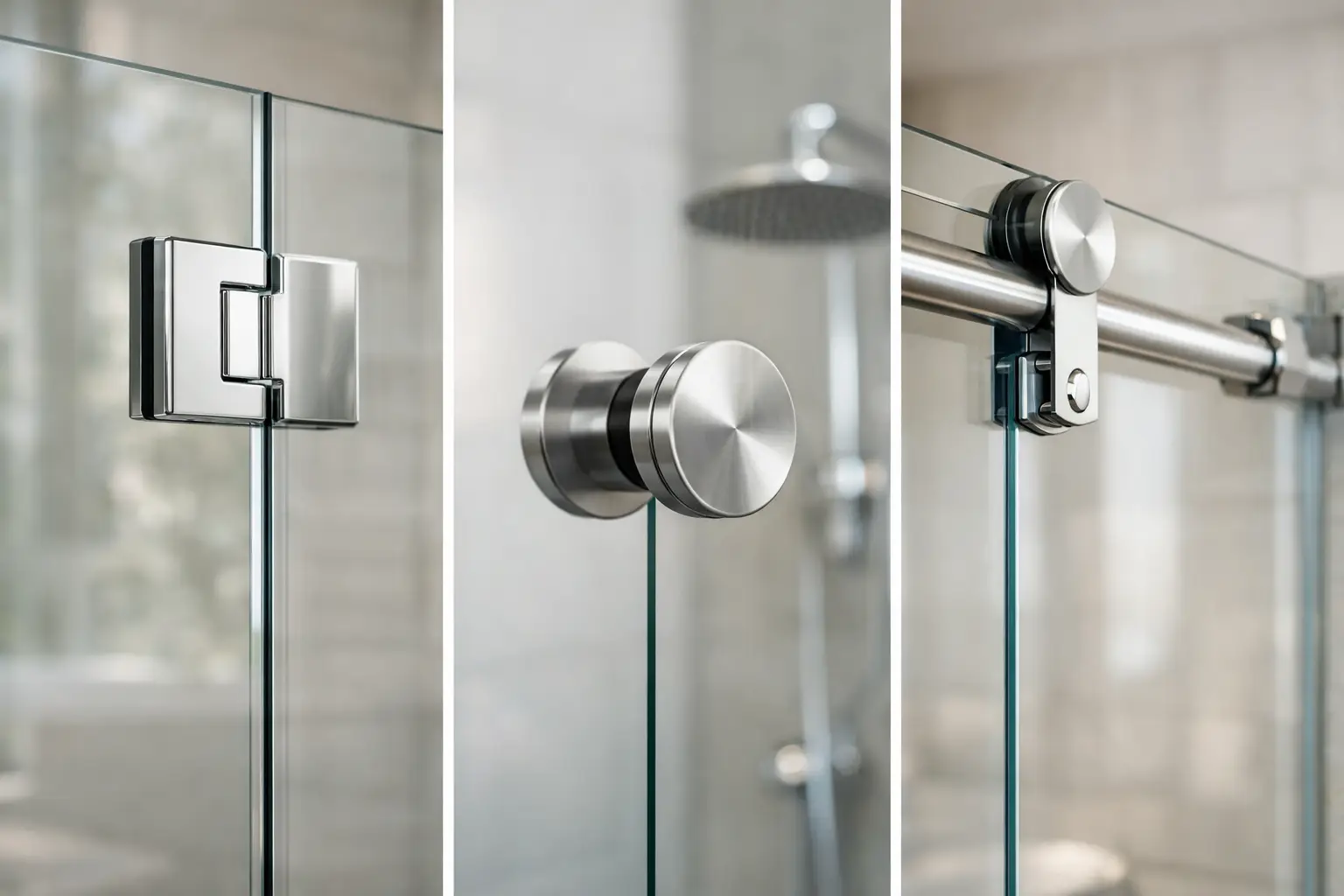
Hinges are the working heart of a frameless shower door. They connect the glass to the wall or a fixed glass panel and control the door’s movement. The most common choices are wall-mounted hinges and glass-to-glass hinges.
Wall-mounted hinges are used when the door attaches directly to a finished wall. They are a strong, straightforward choice when there is proper backing behind the tile or wall surface. Glass-to-glass hinges connect the door to a fixed panel and are often used in corner or inline designs where the enclosure has more than one glass section.
Many quality shower hinges are self-closing, meaning they guide the door closed during the last few degrees of movement. That helps the door settle against its seals rather than being left slightly open. Still, self-closing does not mean slam-proof. A shower door should always be opened and closed with reasonable care.
Hinge selection depends on glass thickness, door width, door height, and mounting conditions. Bigger is not automatically better. The right hinge is the one rated for the door and installed in the correct location with proper support.
Handles and Pulls
A shower handle should feel solid, be easy to grip, and match the style of the room. Ladder pulls are a popular choice for their clean, modern profile. They are available in a range of lengths and can be selected to complement cabinet hardware, faucets, or towel bars.
Back-to-back pulls place a matching handle on each side of the glass. This is common on doors that open outward, since the exterior pull gives you a comfortable way to enter the shower while the interior pull makes it easy to close the door. Some designs also include a towel bar on the outside, which can be useful when wall space is limited.
Smaller knobs and finger pulls can work in compact layouts, but they are not always the most comfortable option for everyday use. For a primary bathroom or a shower used by several family members, a full-size pull is usually the more practical choice.
Clips, U-Channels, and Header Bars
Fixed glass panels need support, and there are several ways to provide it without taking away from a frameless look. Glass clips are small mounting pieces that secure the panel at the wall, floor, or curb while keeping the glass edges visible. They create a minimal, high-end appearance.
U-channel holds the edge of the glass in a narrow metal channel. It is still a clean option, but it offers a little more forgiveness when walls or surfaces are not perfectly straight. In some applications, it can also provide a more continuous attachment along the panel edge.
A header bar may be used across the top of certain enclosures for added stability. It is more common with wider openings, taller panels, or sliding systems. While some homeowners prefer the open look of no header, stability and safe performance should lead the decision. The best design is one that looks sharp and holds up for years.
Seals, Sweeps, and Water Management
Clear vinyl seals and door sweeps are easy to overlook because they are not decorative hardware, but they do important work. They close small gaps between glass panels or between the door and fixed glass, helping direct water back into the shower.
Frameless glass enclosures are designed to minimize water escape, not to function like a fully gasketed commercial door. A small amount of moisture near the opening can happen depending on showerhead placement, spray pressure, door gaps, and how the shower is used. Proper panel overlap, threshold slope, and quality seals make a major difference.
If keeping water contained is a top priority, discuss it early in the design process. A door positioned directly in the path of a high-pressure showerhead may need a different layout, additional sealing, or a fixed panel to control spray more effectively.
Choosing a Hardware Finish
The hardware finish should tie into the bathroom, but it also needs to be realistic for daily cleaning and long-term wear. Chrome remains a dependable option because it is bright, versatile, and pairs well with many faucet styles. Brushed nickel has a softer look and does a good job hiding fingerprints and water spots.
Matte black is a strong choice for modern bathrooms, especially when the room already has black lighting, plumbing fixtures, or cabinet pulls. It creates contrast against clear glass and light tile. The trade-off is that soap residue and hard-water spotting may be more noticeable if the shower is not wiped down regularly.
Brushed brass, polished brass, and warmer bronze tones can bring character to a remodel, but matching matters. Hardware from different manufacturers can vary in color, sheen, and undertone even when the finish names sound the same. Whenever possible, choose shower hardware that coordinates closely with the faucet and other visible bathroom metals.
Do not choose a finish based on a tiny online swatch alone. View samples in the bathroom lighting if you can. Natural daylight, warm vanity lighting, and cool tile can all change how a finish reads.
Frameless vs. Semi-Frameless Hardware
Frameless shower doors use thicker tempered glass and minimal visible metal. The hinges, clips, and handles are designed to look intentional rather than hidden. This style works especially well when you want to show off tile work, create a more open feel, or make a smaller bathroom appear less closed in.
Semi-frameless enclosures use more metal framing around certain edges, often at a lower price point. They can be a practical choice for rental properties, secondary bathrooms, or projects where budget is the deciding factor. The frame can also help accommodate some opening conditions that are less ideal for a fully frameless system.
Neither choice is automatically right for every home. Frameless glass is a premium finish that depends on accurate measurement and careful installation. Semi-frameless can be a smart, durable solution when the layout and budget call for it.
Details That Prevent Problems Later
The best time to discuss hardware is before tile is finished or before the glass is ordered. If hinges will mount to a wall, there should be solid blocking behind the finished surface. If a door needs to swing outward, nearby vanities, toilets, and towel bars need to be checked for clearance.
It also helps to think about who will use the shower. A tall ladder pull may look great, but a shorter pull can be more comfortable for children or family members with limited reach. A large, heavy door can feel substantial, but a narrower door may be easier to operate and put less stress on the layout.
At Top Tier Glass & Mirror, the goal is not to push one hardware package onto every project. It is to match the glass, opening, finish, and budget so the enclosure operates correctly and looks like it belongs in the room.
A well-planned shower enclosure should feel simple once it is installed. Choose hardware that supports the way the bathroom is used, keep the finish consistent with the rest of the space, and let precise measurements guide the final design. That is how a custom shower stays clean, solid, and dependable long after the remodel is done.